
What is Direct Access (DAS)?
If you’re tired of engine restrictions and L-plates, the Direct Access Scheme (DAS) is your ticket to the open road. DAS is the most direct path for riders to earn a Full Category A Motorcycle License, allowing you to ride any size or power of bike immediately upon passing.
The Direct Access Scheme is a training and testing program regulated by the DVSA. It is designed specifically for:
• Riders aged 24 and over who want to jump straight to a full licence.
• Riders aged 21 and over who have already held an A2 restricted licence for at least two years (Progressive Access).
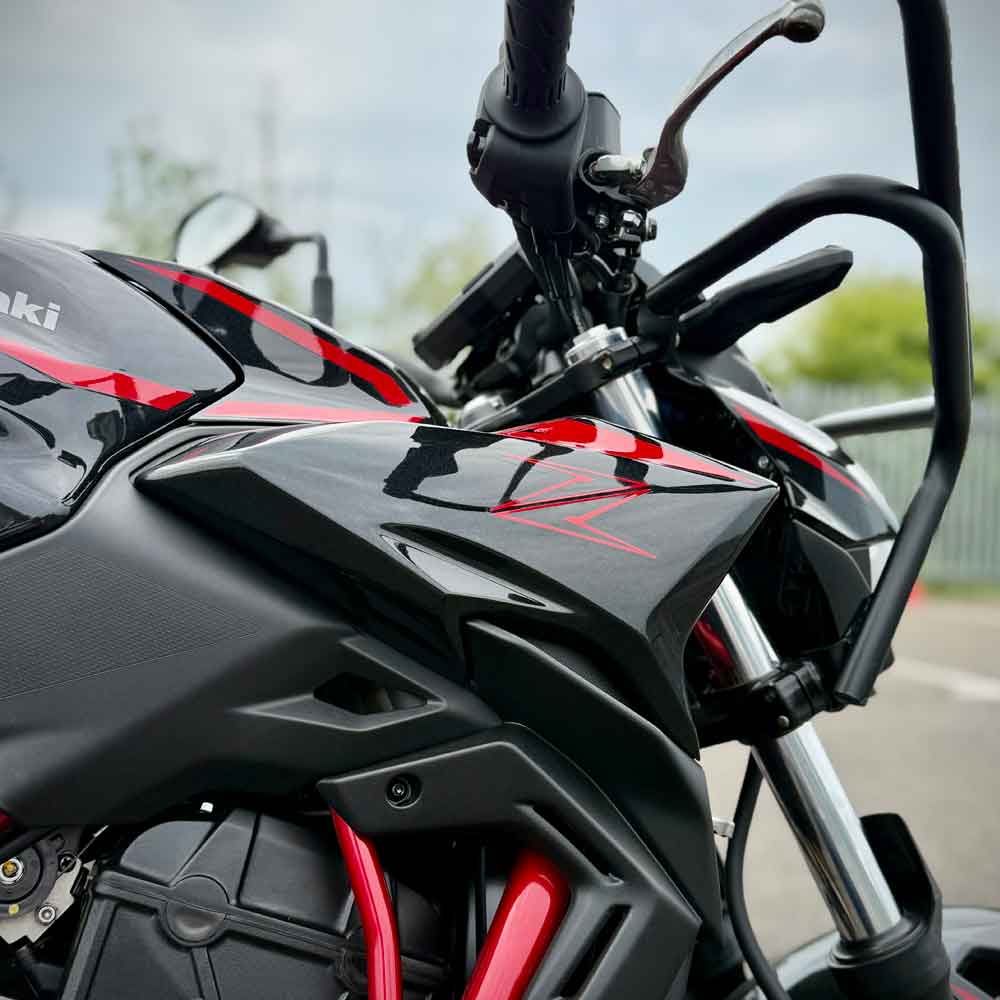
Unlike other licensing categories, DAS training and testing are conducted on “large” motorcycles—typically machines with an engine displacement of at least 600cc and a power output of at least 50kW.
Mod 1 (Module 1)
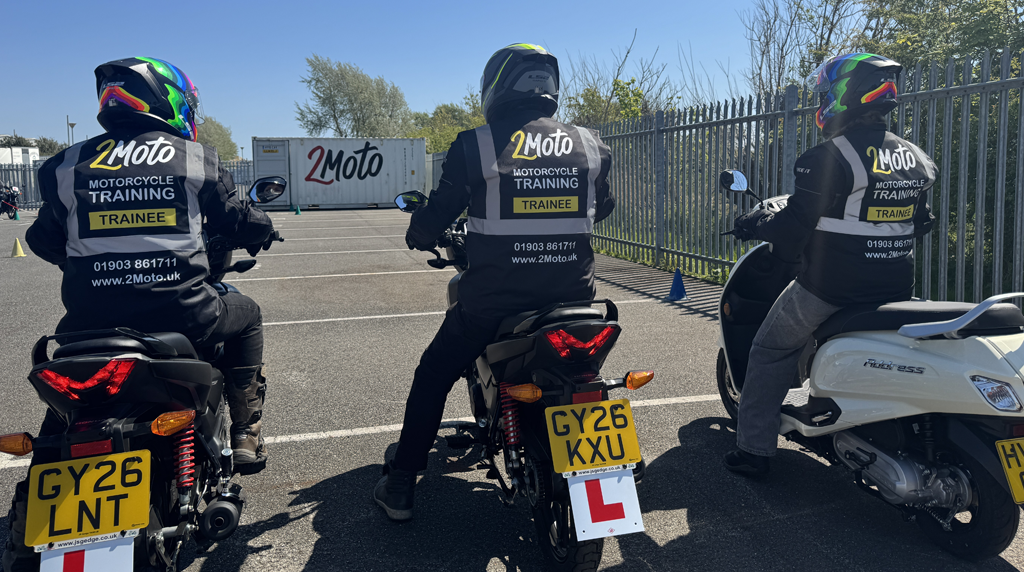
The Module 1 (Mod 1) motorcycle test is an off-road, roughly 20-minute practical exam conducted by the DVSA in the UK to assess your machine handling skills. It takes place at a designated motorcycle manoeuvring area (MMA).
Here is a breakdown of what you must do during the test:
Mandatory Test Exercises
You will be asked to perform several manoeuvres, categorised by speed:
Slow Speed Manoeuvres
- Manual Handling: Remove the bike from the stand, wheel it backwards in a straight line, and park it using the stand, all without turning on the engine.
- Slalom & Figure of Eight: Ride in a zigzag pattern around cones and then perform a figure of eight around two cones.
- Slow Ride: Ride at a walking pace in a straight line, often with the examiner walking alongside to check control.
- U-turn: Perform a U-turn within designated marked lines (approx. 7.5m apart).
Higher Speed Manoeuvres (Min 50kph / 32mph)
- Controlled Stop: Ride around a circuit, exit a bend, and stop with your front wheel between two cones.
- Emergency Stop: Accelerate to at least 50kph (32mph) and brake to a stop in a controlled manner, as instructed.
- Hazard Avoidance (Swerve): Accelerate to at least 50kph (32mph), then steer around a cone (avoidance), and stop safely.
Key Requirements to Pass
- Observations: You must perform full shoulder checks before moving off, and ensure you check around you when doing manoeuvres.
- No More than 5 Faults: You can fail with 6 or more riding faults (minor errors).
- Zero Serious/Dangerous Faults: Hitting a cone or failing a speed check.
- Control: Keep the motorcycle upright and in control at all times, showing good clutch and rear brake control.
Preparation Checklist
- Documents: Bring your valid CBT certificate, theory test pass certificate, and your UK photocard licence.
- Gear: Wear appropriate protective motorcycle clothing.
- Bike: Ensure the motorcycle you are using is roadworthy, has L-plates, and has a mph speedometer.
You must pass Mod 1 before you can take the Module 2 (on-road) test. If you fail, you must wait at least 3 working days to retake it.
Mod 2 (Module 2 – The road ride
Module 2 (Mod2) is the on-road, 40-minute practical test that assesses your ability to ride safely in real-world traffic conditions. Examiners are looking for safe, confident, and legal riding, not just technical ability.
What You Have To Do on Mod2
The test consists of four main sections:
- Eyesight Check & Questions (5 mins):
- Eyesight: Read a number plate from 20 meters.
- Show Me, Tell Me: Answer two safety questions (one “show me”, one “tell me”) regarding vehicle maintenance and passenger carrying.
- On-Road Riding (approx. 25 mins):
- Follow instructions from an examiner via a one-way radio.
- Perform normal stops, an angle start (pulling out from behind a parked vehicle), and a hill start.
- Navigate various road types (30–70 mph), junctions, roundabouts, and traffic lights.
- Independent Riding (approx. 10 mins):
- Follow road signs or traffic directions to a specific destination without direct instruction.
- This assesses your decision-making and safety when navigating.
What Examiners Are Looking For
Examiners are evaluating you against the Highway Code and the official DVSA Guide to Riding.
- Observation: The most crucial element. You must check mirrors and use “lifesaver” shoulder checks before changing direction, lane, or pulling away.
- Safe Road Positioning: Choosing the right spot at junctions, roundabouts, and when riding to stay safe.
- Speed Control: Adhering to speed limits, not riding too slowly, and demonstrating good speed anticipation.
- Signalling: Giving clear, accurate signals in good time, and cancelling indicators promptly.
- Defensive Riding: Maintaining a safe 2-second following distance and anticipating the actions of other road users.
- Confidence & Progress: Making good progress when it is safe (e.g., matching the speed limit) and showing confidence at roundabouts. [
How to Fail Mod2
- 1 Serious or Dangerous Fault: Automatic failure (e.g., not checking over your shoulder, forcing traffic to slow down).
- 11+ Minor Faults (Rider Faults): Accumulating too many small mistakes. [1, 4]
Common Mistakes to Avoid
Hesitation at junctions, causing safe gaps to be missed.
Failing to do a lifesaver check before pulling away or changing lanes.
Incorrect positioning at junctions (e.g., too far left when turning right).
Not accelerating to the speed limit promptly when safe.




Ready to Start Your Journey?
Gaining your full Category A license is about more than just the bike—it’s about gaining the skill and confidence to ride safely in any environment. By choosing the Direct Access Scheme, you are investing in a higher level of training that prepares you for the weight and speed of modern motorcycles.
We arrange assessments so you can have a go on a larger bike, and we can advise on how many days we feel it would take to gain your full license.